"I have an idea for one of your commercials. You see a carpenter making a beautiful chair. And then one of your robots comes in and makes a better chair, twice as fast. Then you superimpose on the screen: USR — shittin' on the little guy. Fade out."
— Detective Spooner, I, Robot (2004)
Clickbait headline, right? It's also a lift. In 1983, Datamation ran Ed Post's essay Real Programmers Don't Use Pascal — a mean, very funny parody of the era's bestseller about Real Men who don't eat quiche. Post sketched an archetype: the Real Programmer writes FORTRAN and assembly, punch cards in hand, beer on the desk. Pascal is for softies who need structured programming and guardrails designed to prevent or minimise the usual damage from accidental mistakes in logic. Strong typing, he wrote, is for people with weak memories.
Which is funny, because Pascal was my first language. The absurdity of the essay is that it was already describing a losing position when it was written. Pascal, BASIC, C/C++, Java, Python — all of it arrived, and none of it destroyed the profession. It inflated it. The "Real Programmer" of 1983 reads today like a man refusing to take the lift because real men use the stairs. The stairs are still there. There are just a thousand times more buildings, with a thousand times more floors.
Today the exact same gesture gets repeated almost word for word: real programmers don't lean on AI. It's for startups in a hurry to ship an MVP on the cheap, full of security holes and spaghetti. And behind it you can hear the old refrain from the layman, the founder and the businessman: "well, that's it, coders aren't needed any more." History has been beating that prediction up for decades — not with rhetoric, just with numbers.
Shamans tending room-sized machines
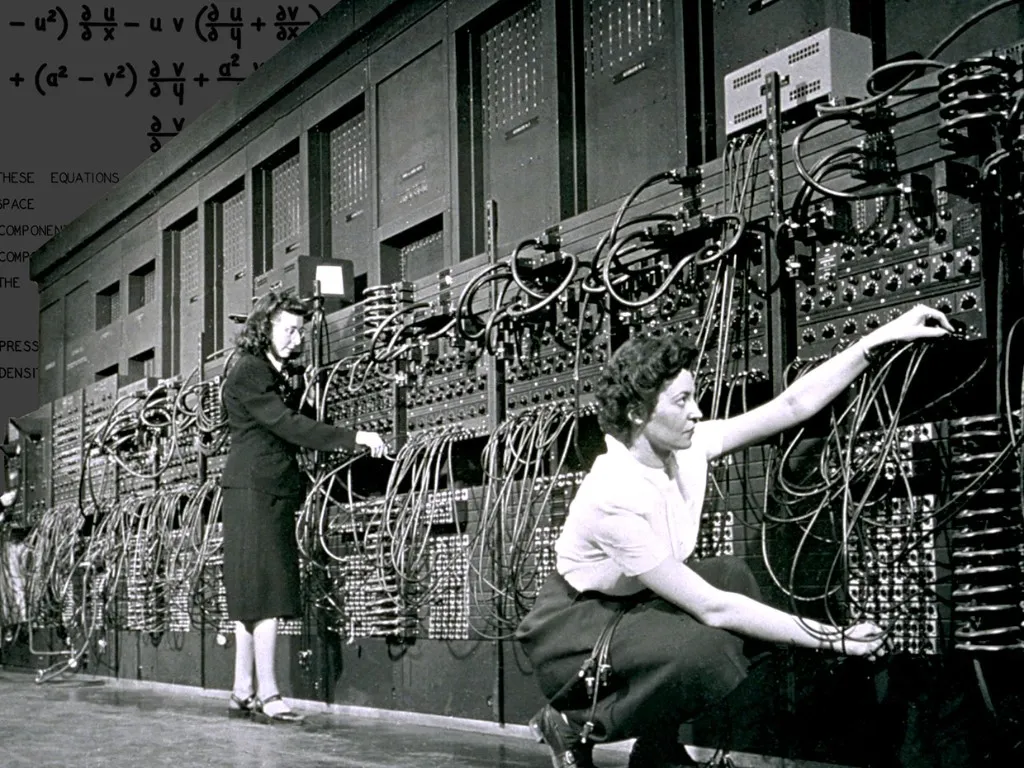
First there were enormous, complicated computers. They filled whole rooms, cost about as much as an aircraft, and only corporations and the military could get near them. There were very few programmers, and they were something close to shamans: they knew the machine by heart, lived in the machine room, and spoke a language nobody outside understood.
In 1945, in the United States, that job was done by six people — the ENIAC team, all of them women, as it happens. Today the figure is ~1.7 million. Around 1980 the US had roughly 300,000 computer programmers; by 1990 it was about 565,000. One decade of the personal computer, and the profession multiplied several times over in a single country. The Bureau of Labor Statistics kept redefining its categories along the way, so cross-era comparisons deserve caution — but the direction of travel isn't in doubt.
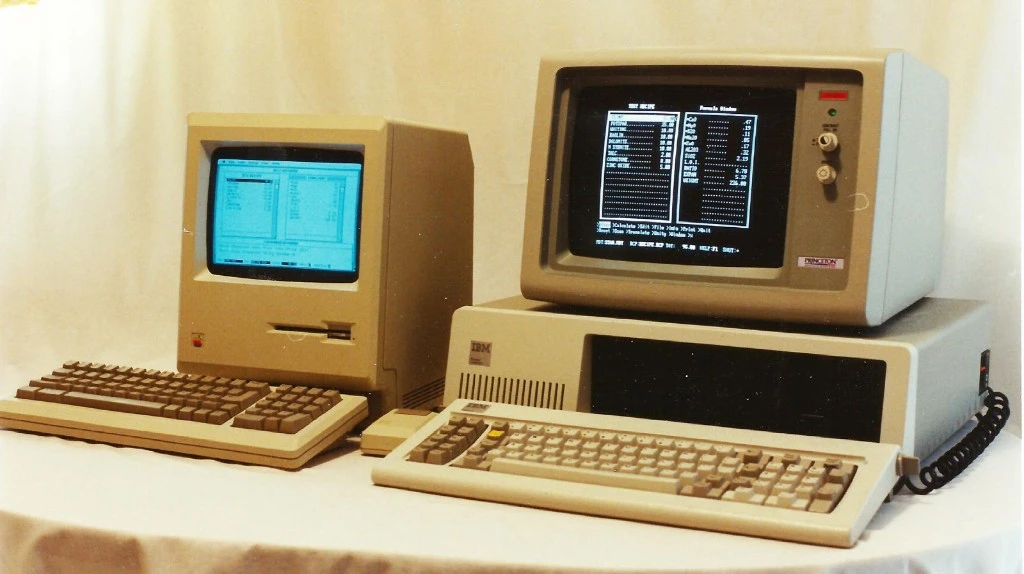
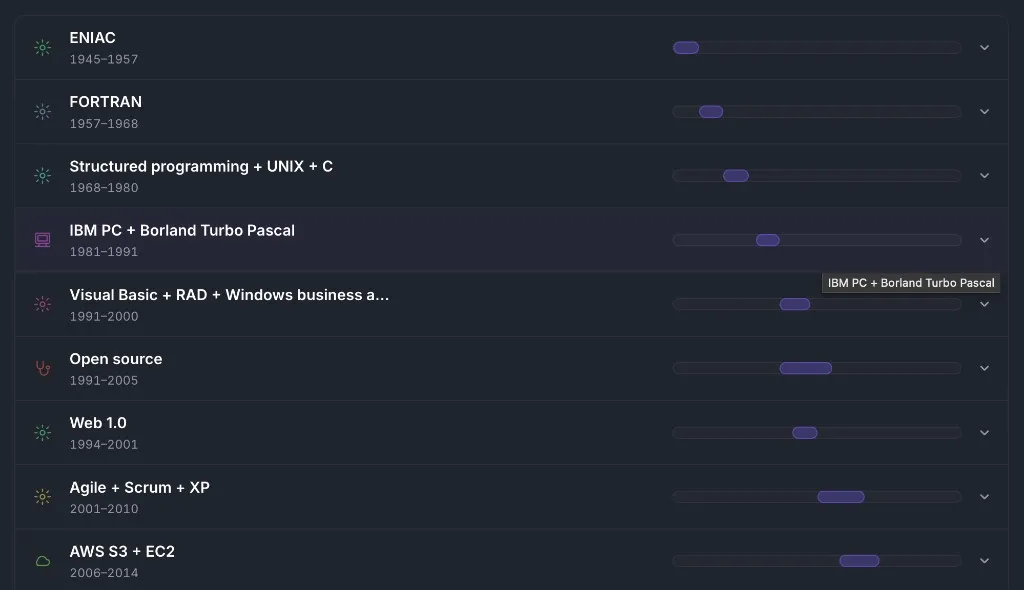
The moment affordable machines showed up — the IBM PC (12 August 1981) and the Macintosh (January 1984), computers you could put on a desk in your own house — the industry needed more programmers, not fewer. Hardware had suddenly gone personal, and somebody had to write software for it. Operating systems, drivers, text editors and a mountain of applications: all of that needed hands.
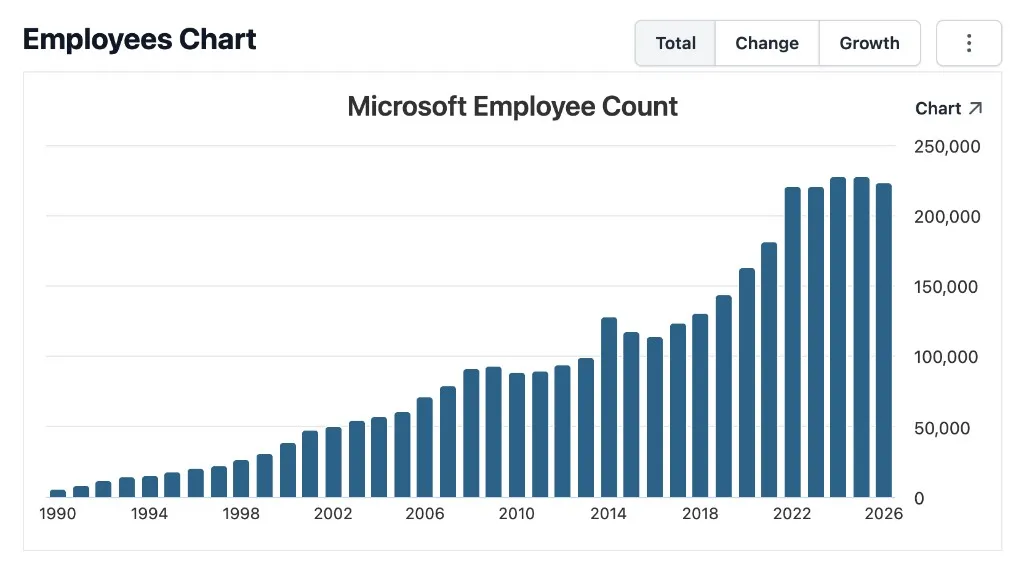
The businesses built around those hands grew in step. Microsoft had roughly 5,600 employees in 1990; by 1999 it was over 31,000. Apple was at around 8,600 by 2000. By 2001 Silicon Valley counted some 26,000 high-tech establishments and hundreds of thousands of tech jobs. Hardware got cheaper, and the number of people at keyboards went up.
"Now any idiot will be able to program"
Then it accelerated. Languages arrived with a much lower barrier to entry: C/C++, Object Pascal, Python, Java. Through the nineties and the 2000s plenty of people sounded the alarm — now any idiot will be able to program, standards will collapse, the profession will be devalued.
And you know what? That's more or less what happened — the bar dropped, in the sense that knowing assembly, or the archaic syntax of COBOL or FORTRAN, stopped being a mandatory ticket into the trade. But here's the paradox: the industry needed even more programmers, not fewer. They multiplied precisely because high-level code was faster to write and easier to read. Instead of one guru hand-writing machine code and counting columns for punch cards, you got an army of developers who could solve hundreds of applied problems in the same amount of time.
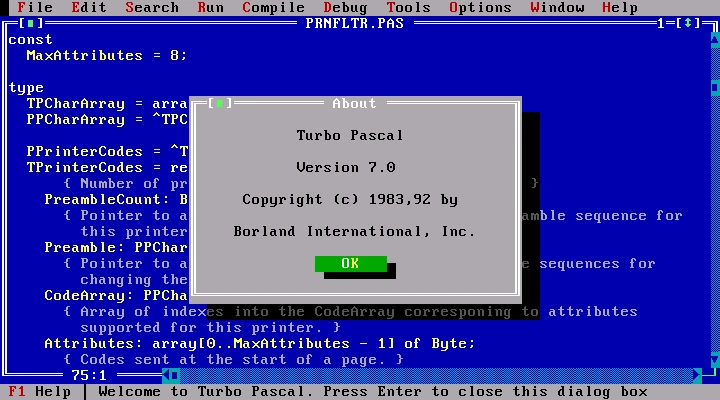
The symbol of the era: Borland's Turbo Pascal (1983) cost around $50 — the price of a textbook. The development environment stopped being a corporate luxury. And when a tool gets cheaper, the number of tasks doesn't shrink; it grows. You no longer had to work at NASA or study at MIT to feel like a real developer — a fifth-grade computing lesson with Borland Delphi did the job perfectly well.
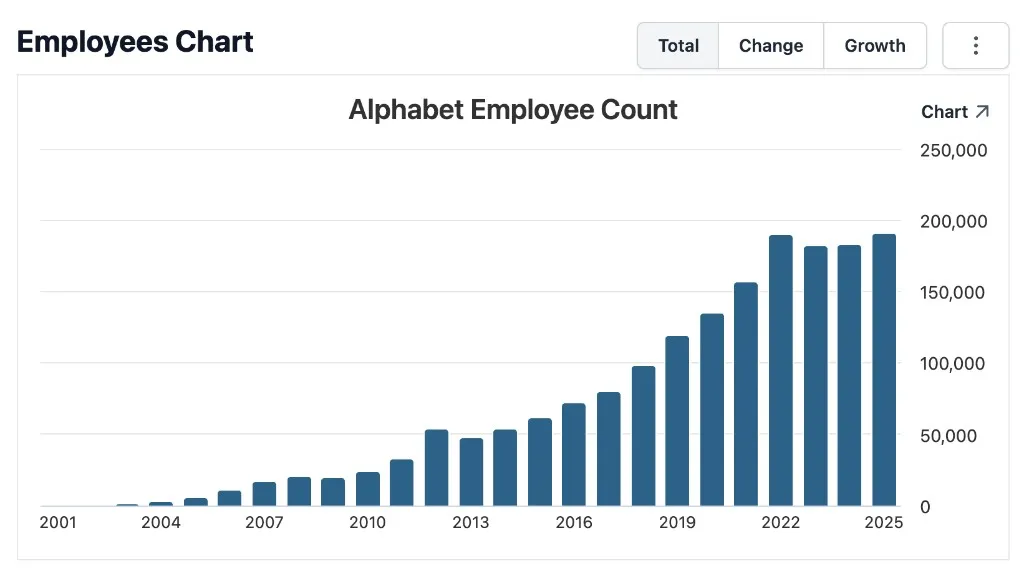
By 2000 the US was talking about roughly 700,000 programmers and software engineers. Microsoft grew to around 93,000 people by 2009. Google, which had 284 employees in 2001, was at about 20,000 by 2009. That is not what "less work, thanks to convenient languages" looks like. That's an explosion of demand for people who build products in those languages.
The internet: "who needs software when you've got a browser?"
Then the internet happened. From slow, hard-to-get dial-up — where a page loaded to the sound of a modem handshake — the network became fast and ubiquitous. And the voices started up again: you won't have to install software on your computer any more, it'll all live in the browser, programmers are finished. No more packaging, no more compilation, no more distribution on floppies and CDs. And no more shops selling those CDs, either.
The opposite happened. Yes, the shops selling install discs did disappear — but there were more programmers than ever, because on top of the desktop we now had the web.
PHP, Perl, JavaScript, C#, Java — these were the languages that let you build sites and web applications. And everyone wanted a piece: a brochure site for a hairdresser, a portal with an online shop for car parts, a forum for fans, a dating site. Demand went vertical.
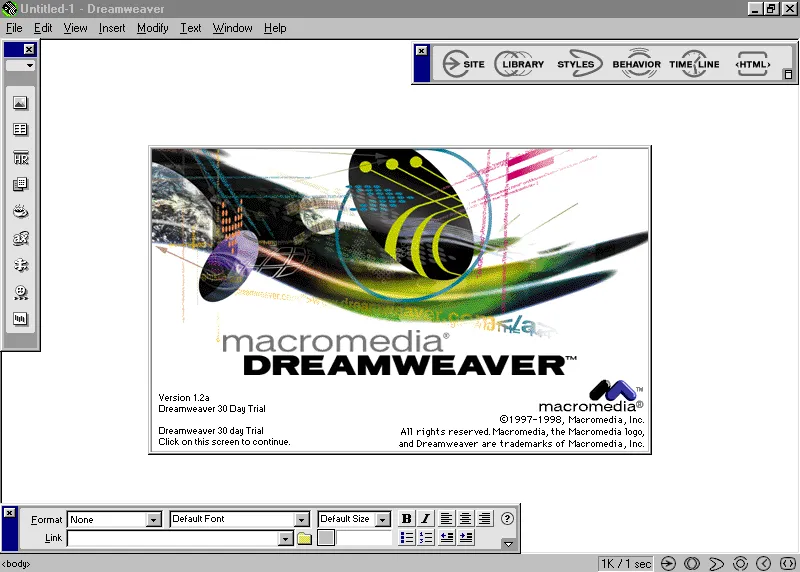
Even then the market was already humming the familiar tune about how "you'll be able to build sites with a mouse" and programmers would become surplus to requirements. Macromedia Dreamweaver was sold almost as the tool that would kill off webmasters and the people who hand-wrote markup: look, you can make a site without any serious programming skill. The same dream was then promised in turn by FrontPage, Webflow, Framer and now Figma with Figma Make. In practice, tools like these don't kill frontend, markup or design. They lower the barrier for routine work while simultaneously raising demand for the people who can do the non-standard thing — reliably, quickly and beautifully.
How many jobs did WordPress alone create? More than 40% of all websites on the internet run on it, and every one of them was built by somebody. Not by the person who used to write assembly or FORTRAN.
Web 2.0: "the users will do it themselves"
Then Web 2.0 landed — the age of user-generated content. Everyone thought: "Right, nobody needs websites now, people will build their own pages, blogs and profiles, no programmers required, the users will handle it."
And? It spawned demand for a pile of new professions — social media managers, marketers, performance advertisers, data analysts. And programmers? There were more of them than ever. They just shifted focus. Instead of simple pages they concentrated on complex interactive web applications — on making all that social fluff actually work, hold millions of requests and stay up.
On the Russian-speaking internet this shift is easiest to see through LiveJournal, the blogging platform that effectively owned that half of the web for a decade — imagine Blogger, MySpace and early Twitter rolled into one dominant cultural institution. It looked as though it turned everybody into a publisher: sign up, pick a theme, write a post, and there you are with a blog, comments, friends, communities and something close to your own media outlet. But for that simplicity to exist, engineers had to build the platform, the friends feed, notifications, anti-spam, media storage and the entire infrastructure wrapped around user content.
MySpace, Facebook, YouTube, Twitter — from the outside it's a "post" button; from the inside it's queues, caches, sharding, moderation, ad auctions, anti-fraud. The simpler the interface for the user, the harsher the engineering underneath it.
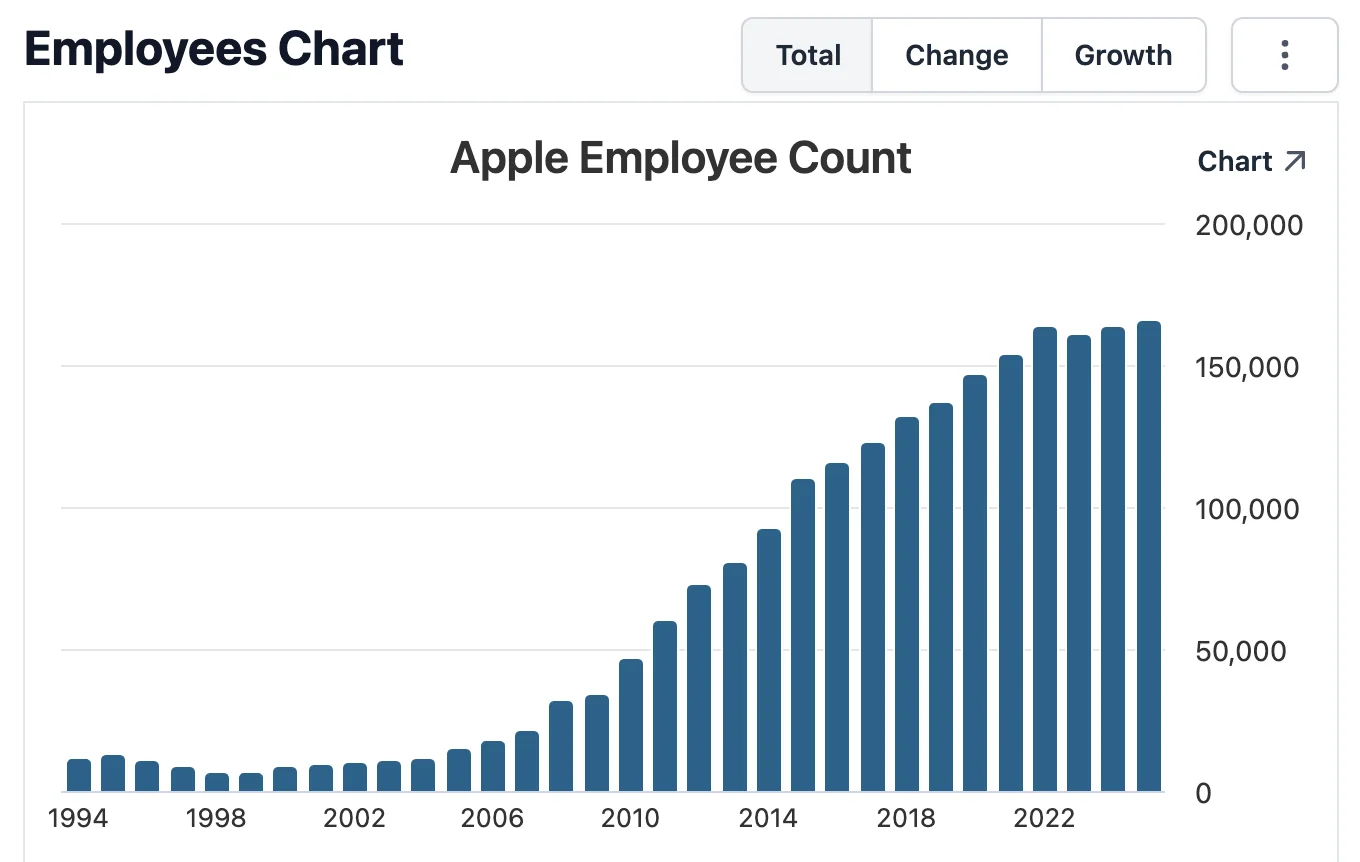
By 2010 Google had grown to 24,000 employees; by the end of the decade Alphabet was pushing 120,000. Apple, post-iPhone, went from roughly 47,000 in 2010 to about 137,000 in 2019. Microsoft over the same years went from ~90,000 to ~144,000. That's total headcount, not just engineers — but the vector is the same: platforms devour people, and the software engineers among them are not a shrinking share.
Mobile phones and smartphones: "desktop is dead, the web is dead"
Then came smartphones. Everyone shouted: "Desktop is dead, the web is dead, it's all mobile apps now! Everything in your pocket!" Same logic as before: the apps are already written, just download them and get on with it.
Except no. The industry needed even more programmers, because on top of the web you now had to build for two new operating systems — Android and iOS (three, for a moment, if you count Windows Phone). In new languages: Objective-C/Swift and Java/Kotlin. Plus mobile backends, plus synchronisation, plus offline modes.
This was the next milestone in computing's accessibility after the IBM PC and the Macintosh: computers were no longer in the house, they were literally in everyone's pocket. A generation later the same logic reached the point where even a crypto wallet and a web3 browser install from the App Store like any other mobile app. The web didn't disappear, and neither did frontend or backend — another layer of packaging, integrations and security requirements simply appeared on top of them.

Meanwhile the internet and the web went nowhere; the browser zoo just got bigger and sites now had to be adapted for mobile as well. The developer army grew several times over — and that's with me deliberately skipping the transitional period of Java Micro Edition and Opera Mini.

People got sick of the identikit blogs and clone pages that blogging platforms and content management systems churned out. Building sites came back into fashion — only now they had to be stylish, distinctive, one-of-a-kind landing pages. This was the dawn of the graphic designer as a profession, because it was no longer enough to lay out a page and drop typography and colour on it tastefully; you needed parallax, animation and gorgeous stock photography. Designers, photographers, videographers, illustrators, SEO specialists and copywriters all got their turn.
The old law kicked in again: a new platform doesn't cancel the old work, it adds a layer. A bank needs a website and an app. A retailer needs a website and an app and an admin panel and a warehouse service and...
Blockchain and Web3
Along came Web 3.0 and blockchain — same song, again. The industry needed even more programmers, to write smart contracts and to think about security and decentralisation. Part of the hype deflated; part of it settled into fintech and infrastructure. But even in its noisiest form the logic never changed: every new turn of the wheel demanded fresh blood and fresh minds (and fresh graphics cards).

Take in the whole history at once and it becomes obvious: every new iteration of technology generated only greater demand for programmers and adjacent tech roles. Processors changed, operating systems changed, so did languages, platforms and frameworks. Demand didn't merely refuse to fall — it kept climbing.
Globally, SlashData put the developer community at roughly 31 million at the start of 2022 and around 47.2 million at the start of 2025. Wikipedia, citing industry estimates, lands in the same order of magnitude. The methodologies differ. The direction, again, only points one way.
This isn't just an IT thing
The same trick — "technology will kill this profession" — keeps repeating outside of code, too.
In the early 2010s, and especially between 2011 and 2015, it seemed almost self-evident that autopilots and driverless rigs would wipe out truck driving. People wrote about the millions of jobs that were about to vanish. More than a decade has passed. The technology drives around test tracks and selected highways; in mines and closed environments it already makes real sense — but on ordinary roads, with people, weather, customs paperwork and the last mile, a human is still behind the wheel. Meanwhile the US and Europe have a chronic shortage of long-haul drivers: the IRU in 2025 estimated some 2.9 million unfilled positions across 18 markets and roughly 502,000 unfilled in Europe alone. McKinsey still writes not about a profession disappearing but about a shortfall of 80,000+ drivers in the US and hundreds of thousands in Europe — as the primary incentive for automation.
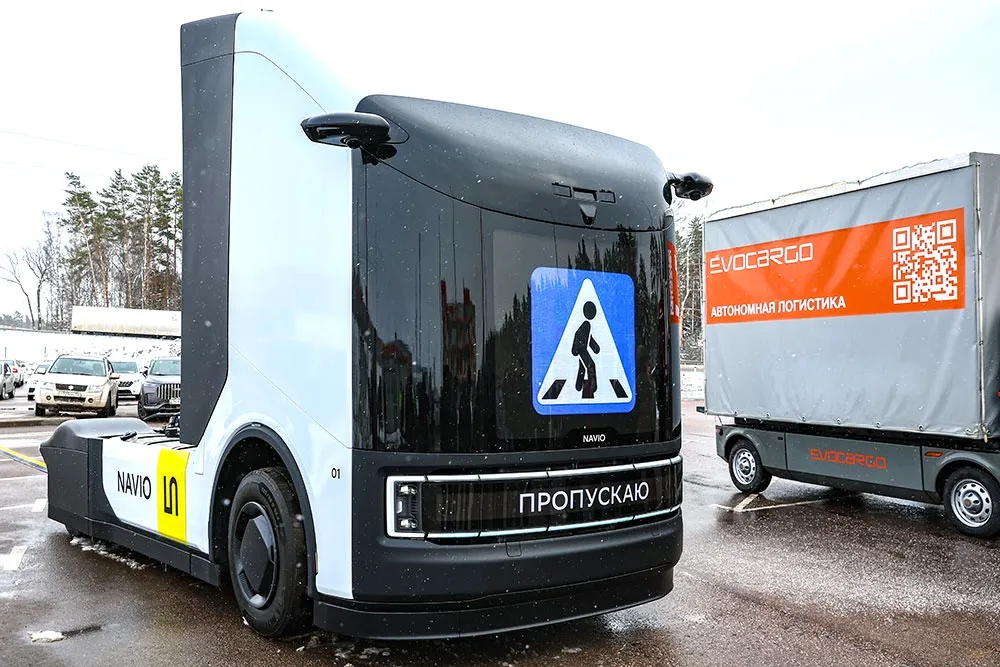
Here in Belarus, my own local labour market, the picture is even more mundane. International haulage is one of the most in-demand and best-paid things you can do here: among the families around me, something like one in three has a long-haul driver in it, because it pays. Not because "the technology doesn't exist", but because messy physical reality turned out to be more durable than a conference slide. Autopilot helps, but it hasn't struck the job off the economy's list.
Delivery tells the same story. Drones, autonomous vehicles and delivery robots have been sold for years as the next obvious step, the moment when the human link in the chain finally becomes unnecessary. The facts remain stubbornly otherwise. In Moscow, according to the city transport department, 700,000 orders a day were being delivered in 2026, and the number of couriers has grown 15-fold since 2020, to 120,000 people. Estimates from RAEK/Infoline put Russia at over 1 million couriers back in 2023, and around 1.2 million by the middle of that year. Automation arrived — and the number of people in the system went up, not down.
SuperJob noted separately in 2025 that the market rate for couriers is already 24% higher than for qualified specialists without a degree, and 12% higher than for specialists with one.

Richard Campbell tells an interesting story in a talk close in spirit to this essay. Long before ChatGPT went public, corporations were already deep into AI work. At the origins stood Geoffrey Hinton — a British scientist and professor who worked in Canada at the University of Toronto. He later founded a company that Google acquired, and that acquisition became the foundation of Google Brain. He worked intensively on image recognition.
Image recognition moved into medicine — MRI, X-rays and other scans. In 2016 Hinton declared that the radiologist's profession was effectively doomed and that computers would take over the work in time. American regulators have since certified more than a thousand AI models for medical image recognition. Was Hinton right? Not even close. The opposite happened: demand for radiologists shot up, because demand for medical imaging shot up with it.
When a radiologist needed six weeks to read a scan, doctors simply didn't order that study — nobody wants to wait months for a diagnosis. Once new software arrived and radiologists' throughput jumped, demand for imaging grew faster than the capacity to meet it. Throughput rose, but the radiologist still can't keep up with the rising flood. The number of radiologists is growing too — but training people takes time.
The physical world is especially hard. I have a Dreame D9 Max and a semi-automatic H15 Pro at home, and between them they still can't clean a flat the way an ordinary vacuum cleaner in human hands does. The paradox is that technological progress has so far led not to the disappearance of the vacuum cleaner from my life but to an increase in the number of vacuum cleaners in the house. Yes, in some places I'm doing less of the cleaning myself. But I'm still doing it. In the physical world, automation usually adds a new layer of tooling alongside the human rather than erasing the human from the process.
So why the mass layoffs? They aren't about AI
There's one thing that gets confused with "the end of the profession" more than anything else: the waves of Big Tech layoffs since 2022. Headlines love pinning them on ChatGPT. The reality is far duller, and far older.
At the height of the pandemic, companies hired as though remote work, e-commerce and "digital transformation" would keep climbing at 45 degrees forever. Cheap money, zero interest rates, record venture funding; Zoom and food delivery looked like the new baseline of the economy. FAANG and its neighbours inflated headcount by tens of percent a year — Meta and Amazon came close to doubling over the pandemic years, while Alphabet and Microsoft added roughly half again or more. Then came inflation, rate hikes, collapsing valuations, and investors who wanted profitability instead of growth at any cost — so companies started cutting the thing that is easiest to cut in tech: people.
Worth stressing: even after the loudest rounds of cuts, many of these giants were still larger than they had been before the pandemic. By some estimates, the combined layoffs at the largest firms rolled back only a small fraction of the staff hired during COVID — on the order of a few per cent of the pandemic-era increase, not a zeroing-out of the industry. It's a correction of an overshoot, a reallocation of resources inside companies (out of experiments and pet projects, back into the core) and a reaction to macroeconomics — not a technological revolution killing demand for engineers.
Geopolitics, economics, wars and conflicts, migration crises hit employment far harder than new technology and automation ever have. And we've seen this film before.
After the dot-com crash of 2001–2003, tech lost hundreds of thousands — by some estimates more than a million — jobs over a few years. In Silicon Valley, high-tech employment in 2008 was still around 17% below the 2001 peak. But US IT employment bounced back quickly after the dip: by the mid-2000s it was growing again and had overtaken the bubble.
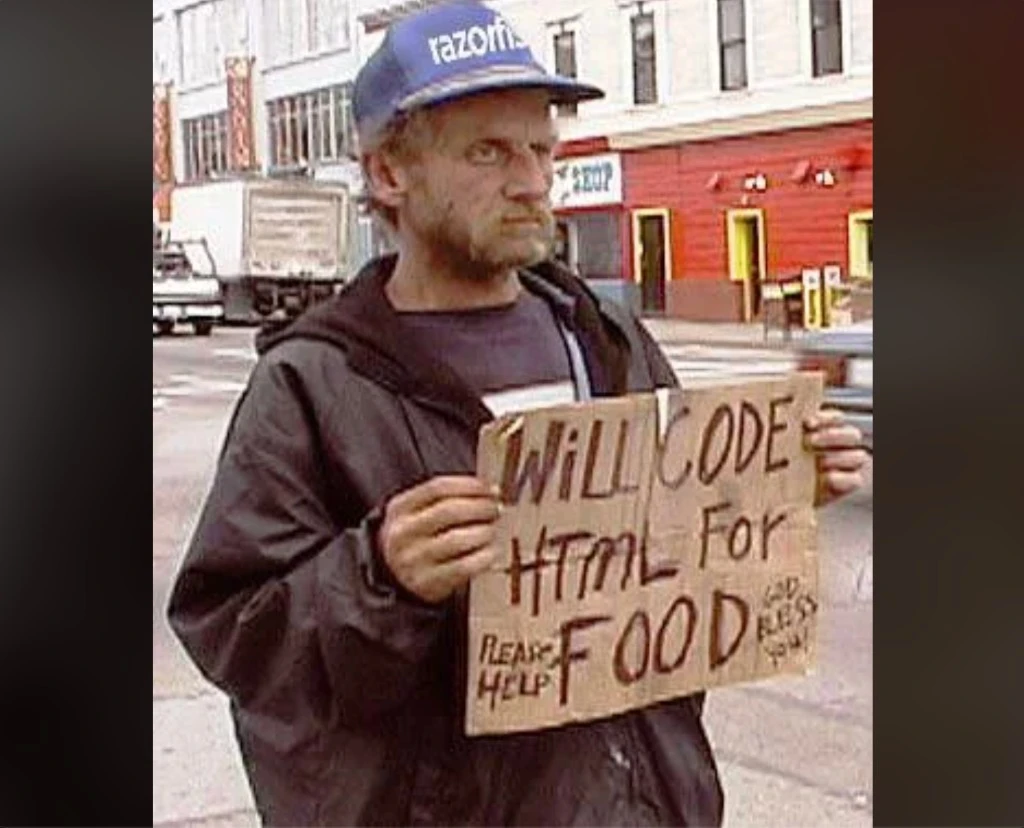
Then 2008 did it again: telecoms, computing and electronics announced roughly 187,000 job cuts in a single year — the highest since the tail end of the dot-com bust. The cause wasn't "a new framework appeared". It was a financial crisis and a collapse in demand.
Downturns are cyclical. AI and technology have nothing to do with it in the way they're currently being blamed. Neither 5G, nor iOS/Android, nor the arrival of Java and the slow "death" of COBOL crashed the labour market for programmers. New technology changed what you write and what you write it in; sometimes it hurt specific niches and specific people badly — but demand for engineers overall went up, and the crashes lined up with money, interest rates, hiring bubbles and macroeconomics.
Confusing "the easy ride on bloated COVID headcount is over" with "the profession is over because of AI" is the same error as confusing Pascal with the end of programming in 1983.
Technologies die, professions don't
Time and evolution killed the technology, not the profession. Good engineers retrained and stayed in the industry.
So that the argument doesn't look invulnerable: local deaths did happen, and they were brutal. Typesetters. Punch-card operators. Chunks of COBOL support in banks, as systems were archived or outsourced. Delphi programmers, once the market moved to web and mobile. Flash, when the browsers and Apple closed that chapter. Java ME, Windows Phone and Symbian, when Android and iOS simply ate the platform.
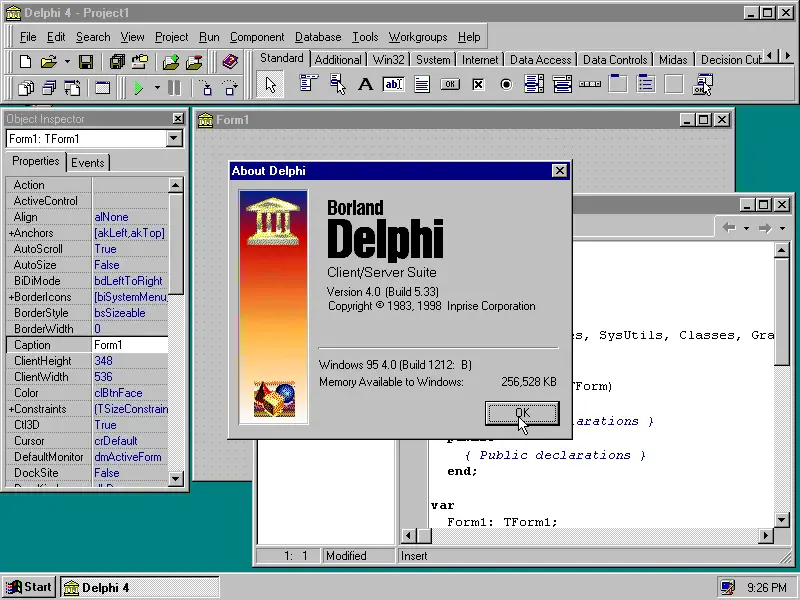
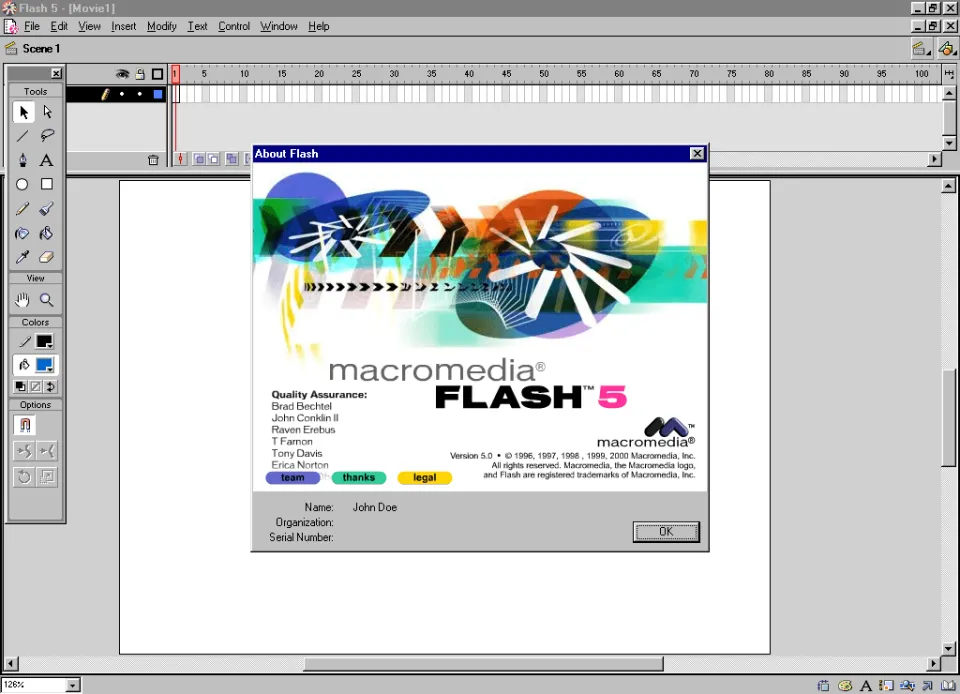
But time and evolution killed the technology, not the profession. Good engineers retrained and stayed in the industry. The inflexible ones may have left, switched stacks too late, or dropped out of tech entirely. That is genuinely painful at the level of an individual career. It doesn't refute the wider picture.
Software engineering is not a language, a framework, an operating system or a particular processor. It's a set of approaches, accumulated experience and a pragmatic eye: the ability to find your way around somebody else's system, weigh up risk, pick a solution that's good enough, and carry your skills over to the next tool. Languages and platforms change more often than the substance of the work does. Anyone who identifies with a stack the way they identify with themselves is exposed. Anyone who holds the craft more broadly than the stack usually survives Pascal, Flash and whatever the next hype cycle turns out to be.
And now, AI
The question of whether machines can think is about as relevant as the question of whether submarines can swim.
— Edsger Dijkstra
Now look at what's happening with AI. The same voices are insisting: "AI will write code faster than a human, programmers won't be needed." But if we look honestly at the history, we see the opposite effect. AI makes programming more accessible than it has ever been. And accessibility, as we've now established several times over, always produces even greater demand for software engineers.
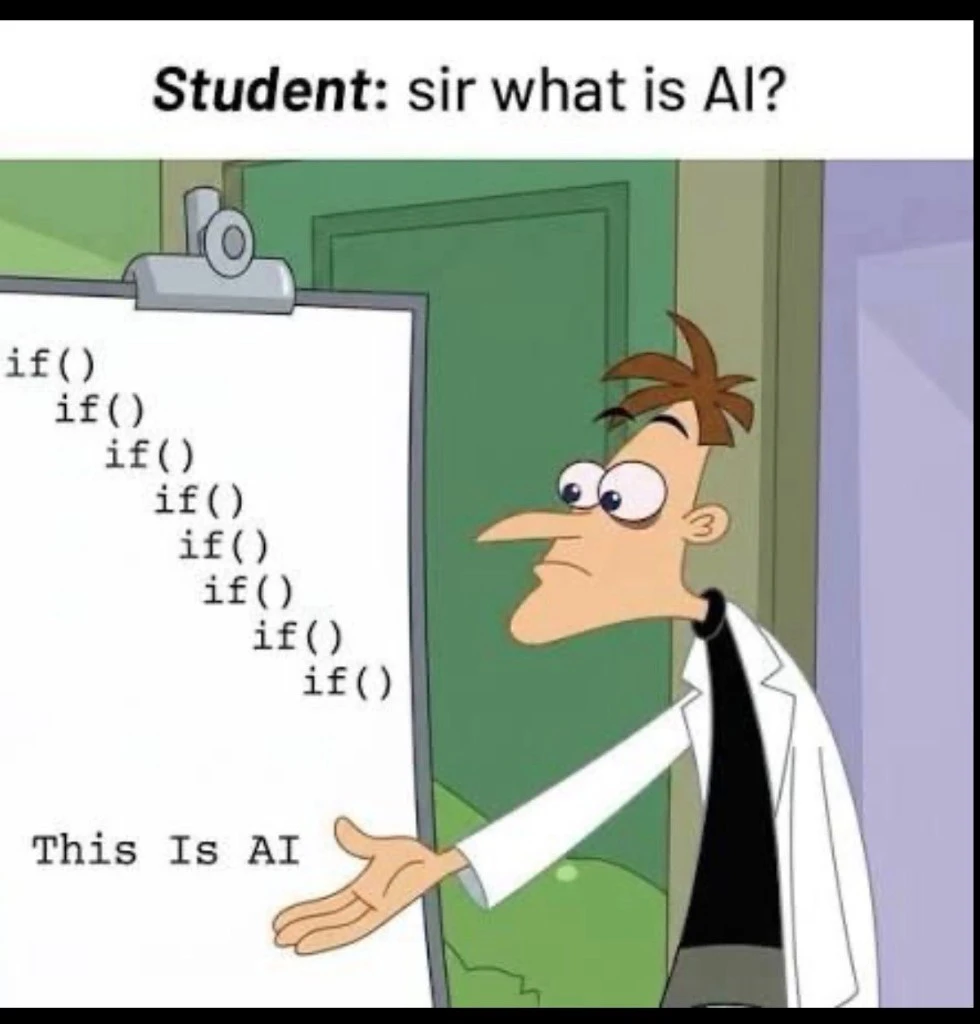
Why? Because when the tool gets more powerful, the bar of expectations rises with it. When people wrote assembly, shipping Snake was impressive. When Python showed up, we started building neural networks and processing terabytes of data. AI today is not a replacement for the human at the keyboard. It's a new level of abstraction. It absorbs the routine — syntax, boilerplate, API hints. And in doing so it generates demand for engineers who can steer it, catch its hallucinations, fix the edge cases, and design the architecture the model hasn't even considered.
Standards will "fall" again in the eyes of the layman: all you need now is to be good at writing prompts. But the profession isn't going anywhere. The person who used to spend all day fixing braces in Java will now spend all day fixing the logic of a complex distributed system that an AI sketched out. And the number of such systems will grow so much that, once again, we'll need more programmers, not fewer.
There will be layoffs at individual companies — there were before ChatGPT and there have been since. There will be people who only ever knew how to copy from Stack Overflow and who now copy the model's answer without understanding it. Their market will contract. But that's about competence and hiring cycles, not about the disappearance of a craft.
The takeaway, minus the slogans
AI won't replace programmers. It will replace the people who don't understand how a computer works with the people who do.
"Real programmers don't use AI" sounds proud and is exactly as ridiculous as "real programmers don't use Pascal". A tool doesn't cancel a craft. It moves the line between the routine and the real work.
AI won't replace programmers. It will replace the people who don't understand how a computer works with the people who do. Anyone who identifies with a single language or framework is as exposed as the Flash-only or Symbian-only developer once was. Anyone who holds engineering as a set of approaches, experience and pragmatic judgement usually stays in the industry, even as the stack shifts underfoot.
This whole argument is a perfect example of generational amnesia in the tech industry. Every time a tool appears that raises the level of abstraction or automates the routine, the older generation of developers prophesies the end of the profession — and the younger generation uses it to punch above its weight.
And the mass layoffs of recent years are, first and foremost, about bloated COVID headcount, expensive money and one more turn of the economic cycle. Judging by the history — from shamans at the mainframe to tens of millions of developers today — this is only the beginning of a long road: not the disappearance of the profession, but yet another round of it multiplying, under a higher bar of expectations.
Economics has a name for this: the Jevons paradox. Improving the efficiency with which a resource is used leads not to lower consumption of it but to higher. When the steam engine became more efficient, we burned more coal, not less.
The same applies to programmers. AI raises a single developer's productivity by a factor of two or three. For a business, that means projects which were previously uneconomic now pay for themselves. Where we couldn't previously justify automating a small shop's logistics or writing a bespoke CRM for a hairdresser, now we can.
Caveats. The Google / Microsoft / Apple headcounts are total employees, not just programmers. The global "millions of developers" figures depend on methodology. BLS numbers across decades aren't perfectly comparable. The Belarusian long-haul example is an observation from the local market, not rigorous statistics from a report.