David Heinemeier Hansson (DHH) is quite a well-known figure in the software world: founder of the product company 37signals, creator of the Ruby on Rails framework, author of books on IT, including ones co-written with Dave Thomas.
At Rails World 2026 he was practically shouting from the stage, foaming at the mouth, that there is no need to write or read code anymore: you can take the most optimal compiled language like Rust, write a server in it, replace all the clients with native implementations for a specific OS — and have no skills in programming, reading, or understanding Rust code, while calling that language the ugliest and most inhuman along the way. But what difference does it make now — a "beautiful" and "human" Ruby or an "ugly" Rust — if the code is now written by a large language model?
He backed his theses with performance numbers, using his product, the HEY email client, as an example. Those results are impressive, more than 90% more performant — if not for the conceptual substitution of technologies: comparing web technologies and compiled system software on performance is incorrect.
Even those who don't care about Ruby didn't pass it by: the talk caused a furor, because it sells the idea that many engineering skills related to code — the ones that used to be valued — no longer matter. Reading code is no longer necessary. Writing code is no longer necessary. DHH: "Don't be losers, don't write and don't read code, use AI."
The same speaker, on top of the blatant propaganda of blind "AI-isation", having taken up one of the radical corners, gives a very strange example — an analogy with artists who painted portraits.
Artists and portraits
Back then, only a rich person could afford to commission a portrait, and the artists who possessed the skill of creating such portraits were valued for their skills and craft. There were few of them, their work was painstaking, and the price of their skills was high. This is an attempt to compare them with the engineers of today, who spend a long time painting their "canvases" in Java and get paid a lot for it. Few can afford such "Java artists" at court.
With the advent of cameras and photographs, the ability to have your portrait made became more accessible, and the skill of creating a portrait by hand, with brush and paints, was devalued.
Again an analogy: artists and portraits are software engineers who write software by hand, and the camera is AI, which makes photo portraits possible even for those who can't draw — i.e., program.
Literally, DHH mentioned that artists like Picasso had to change their style from realism to cubism. At that moment I mentally asked myself: "What on earth is he on about?"
I, as an amateur illustrator, can say that the analogy is monstrously wrong and ignorant.
Artists didn't die out
First, portraits and artists didn't disappear — according to the statistics, there are even more of them now than there used to be. It is extremely hard to gather accurate statistics on the employment of people in the arts, but there is some data. For example, in the USA in 1900 there were about 20 thousand people employed in this field, and 90 years later there were already 10 times more. China alone says a lot here, with its famous entrance exam for art universities and colleges — Yikao (艺考): you can google it and watch videos or look at photos of what it looks like.
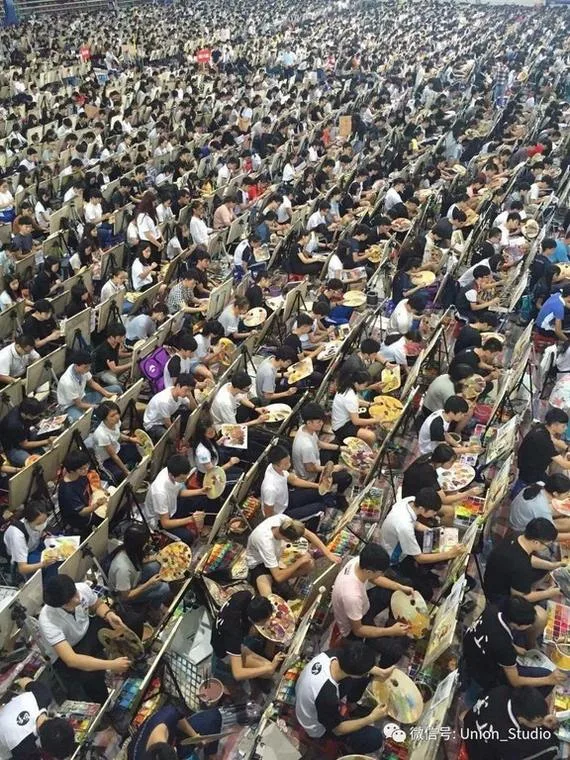
From 500,000 to 1,000,000 applicants take it every year. The most popular track is fine arts, more than 60% of all takers. In other words, even though DHH — unlike his distant relative, whom he showed in the presentation — is not an artist now, it doesn't mean that artists don't exist or died out because of the camera.
Moreover, I will note that academic art to this day is built strictly on realism, on a very precise academic drawing of a portrait or a human figure, with all its anatomy, chiaroscuro, reflected light, and perspective.
The expressionists painted their works and promoted their style and movement for reasons completely unrelated to the technological development of cameras and their affordability at the time. That is a topic for a separate essay, but any art historian will smile and back me up.
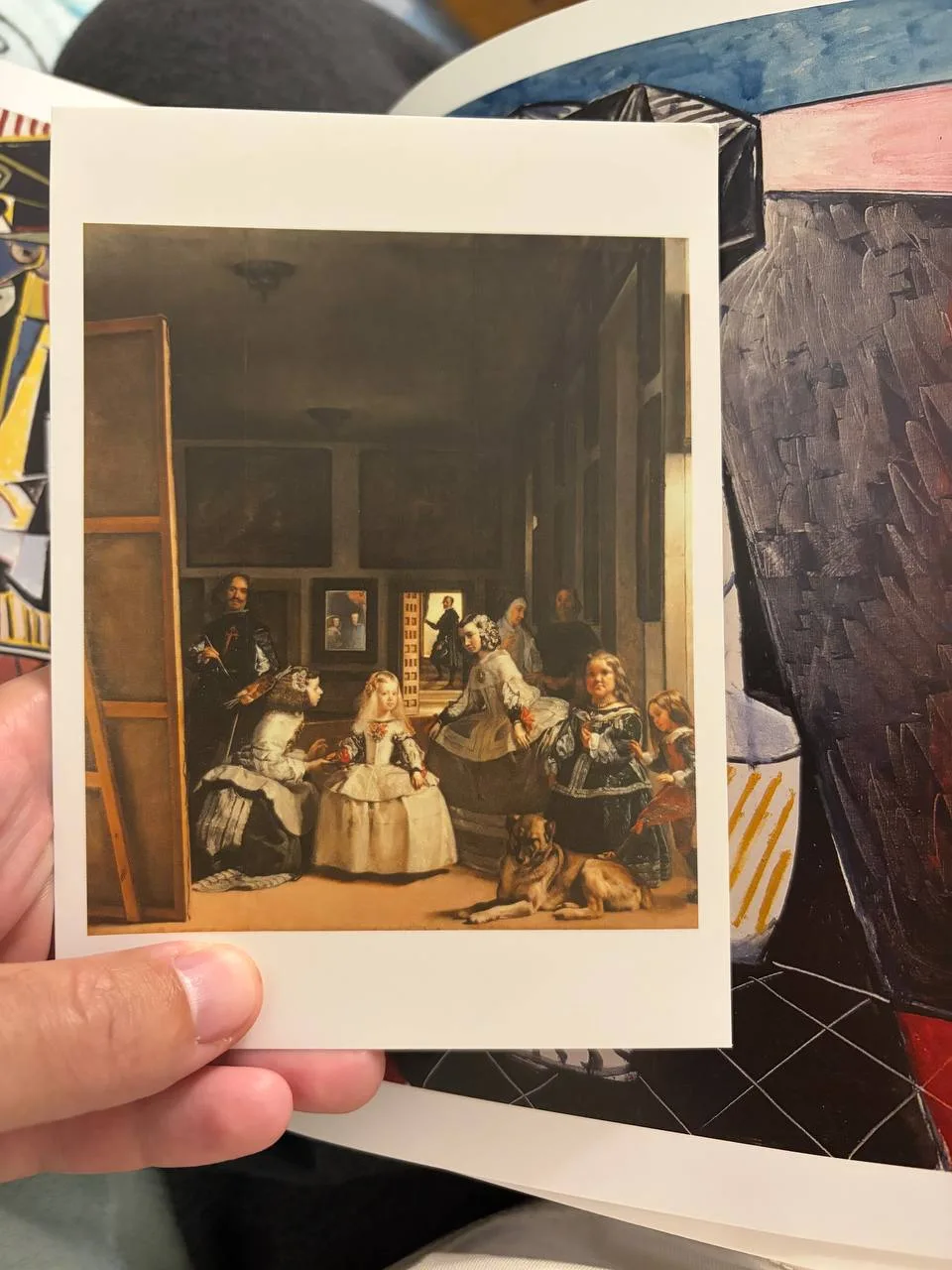
Cubism was not born from the camera
I will only touch on Picasso: if DHH, in his sports car, had driven up to this artist's museum in Barcelona, he might have learned that Picasso began moving away from realism before cubism appeared. His Blue and Rose periods of the 1900s already distort form and color, because they pursue the goal of conveying a mood of isolation, the search for answers, plain melancholy and sadness. It is connected with his personal history, with what he and his friends were going through, and how they coped with it.
Cubism appeared in 1907, when the Stein siblings from the USA were already providing solid, steady financial support to the artist: he had no need to jump out of his pants and break the stereotypes of realism because he was no longer selling. That never happened. The camera was not a problem at all. On the contrary, cubism was born as an opportunity to do something authorial, free from the market, and primitivism of Africa and Oceania served as its base and inspiration — it particularly interested Picasso not only in painting but also in sculpture.
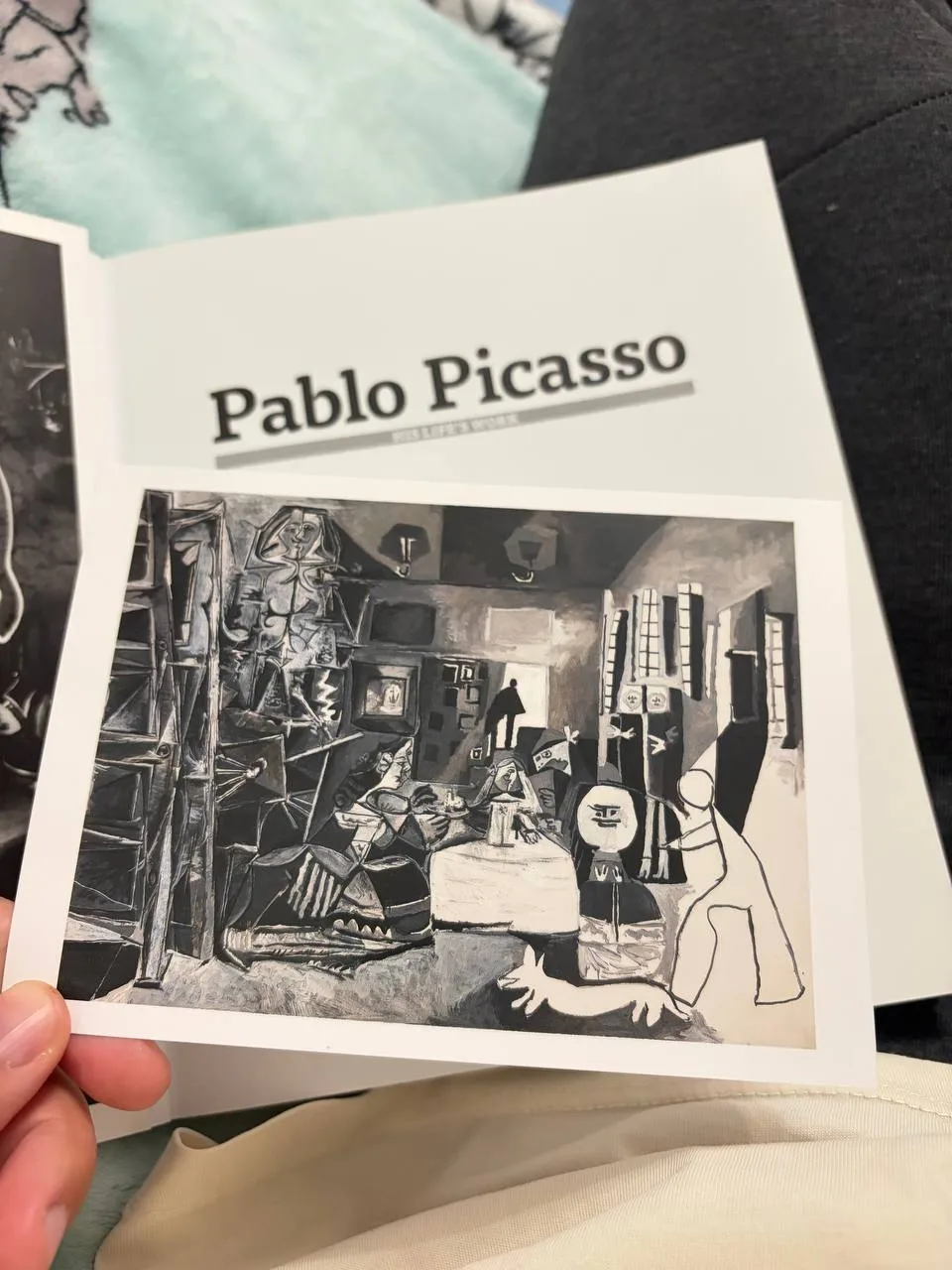
Expressionism appeared a bit earlier and was a reaction to the crisis of values, the war hanging in the air, and urbanization. Surrealism — a bit later, as an interest in the unconscious, in dreams and their interpretation in reality. Chronologically, the camera and photo studios appeared before all these styles, but there is zero connection with technological progress here.
As for the mass-market camera in the hands of consumers rather than photo studios, that is 1925 — the release of the Leica I — which came after all these art movements had appeared.
Not a single professional classical artist traded their craft of brush and paints for silver bromide and magnesium powder with potassium chlorate. Photographers are a new profession, one that increased the number of those trying to capture an image of a person, nature, or architecture — just in a different way.
Photographers and programmers
In exactly the same way that artists didn't disappear, photographers didn't disappear either after the camera appeared in every home — and now in every smartphone, with a pile of filters and modes. Professional photographers still exist, and I suppose their numbers have not been shaken by the latest iPhone versions with their built-in cameras.
The same goes for programming. AI does not replace programmers: AI is a tool in the hands of programmers, one that changes their work and the focus of that work very significantly.
Programming as a discipline is becoming more accessible. Programming in assembly for the Dendy and Sega was the prerogative of a small number of engineers, and so was setting up ENIAC. Far more engineers already write games on Unity 3D, and with AI the number of those building software and games will grow many times over, because the entry barrier and the qualification required are even lower. If you like, this new generation could be called not programmers but creators, builders, or AI operators. For me, the term "programmer" has always meant a person who makes programs work on a computer — i.e., it is not about writing and compiling code; that is just one of the areas. In some elementary school, the person who comes to set up a computer for a teacher is a programmer; the specialist who reinstalled the OS at a clinic is one too. That is why I insist that in my understanding there will be not fewer programmers with the arrival of AI, but more: AI does not replace — it opens up opportunities for new people in the profession and expands the field of activity for the old hands.
A black box
In this respect, the analogy with artists and portraits can work: photography made capturing a portrait or a landscape simpler, and less qualification is needed — you don't have to know how to draw, you only need an advanced technology: a camera, a black box that will do everything for you.
But around the camera appeared a whole bunch of derivative professions: at the very least, the manufacturers of those very devices, those who assemble them and produce components, film development studios, film manufacturers, manufacturers of optical elements for lenses and enlargers, etc. A bunch of new professions.
Smartphones and digital photography killed the very process of film development and the phenomenon of the photo studio, but right next to them they gave birth to a whole optics industry that sits in every smartphone, and corporations like ZEISS (I haven't forgotten you, and I'm still grinding my teeth over you not hiring me! I did pass the interview!).
The craft will not disappear
And through all this evolution, the craft, skills, and knowledge of classical artists have not gone anywhere to this day. Academic drawing has not disappeared. Realism has not disappeared.
Likewise, the algorithmic foundation, the discipline of computer science, and the skill of writing code will not disappear.
At the same time, "mass-ness" is a false axis for measuring both the profession of the programmer and that of the artist. Neither programmers nor artists ever had the ambition of becoming a mass profession — there is no problem here in principle: we don't need as many of them as doctors. An obsession with portraits could create demand for portraitists; an obsession with digital products and startups — for programmers.
And essentially — how much useless, or even harmful, software is out there? And the attitude toward hardware as toward socks — replacing your iPhone every year. I could, of course, drift into global warming now — every joke has a grain of truth in it. The price of AI is data centers and electricity. Nothing more efficient than a nuclear reactor for generating electricity has ever been invented — so think about what future awaits us.
About 37signals and DHH
The products of 37signals LLC are nothing revolutionary — and that is my personal professional opinion. In a sense, they have always been unremarkable, very simple, weak in terms of UX. But the company's team has always possessed incredible inbound marketing and style in this field, thanks to which it had a stable audience that converted into money.
DHH's books, Remote: Office Not Required and Rework, were truly revolutionary and visionary: they went against the standards and promoted what became popular in the post-COVID era, with the rise of remote work. DHH wrote back in 2010 that you can work effectively while remote and build teams and projects!
Articles, talks, development tools, frameworks — all of it is indirect marketing that attracted people. Probably that is why it is so disappointing to see the current technocratic and consumerist attitude of those very same people toward modern engineering.